
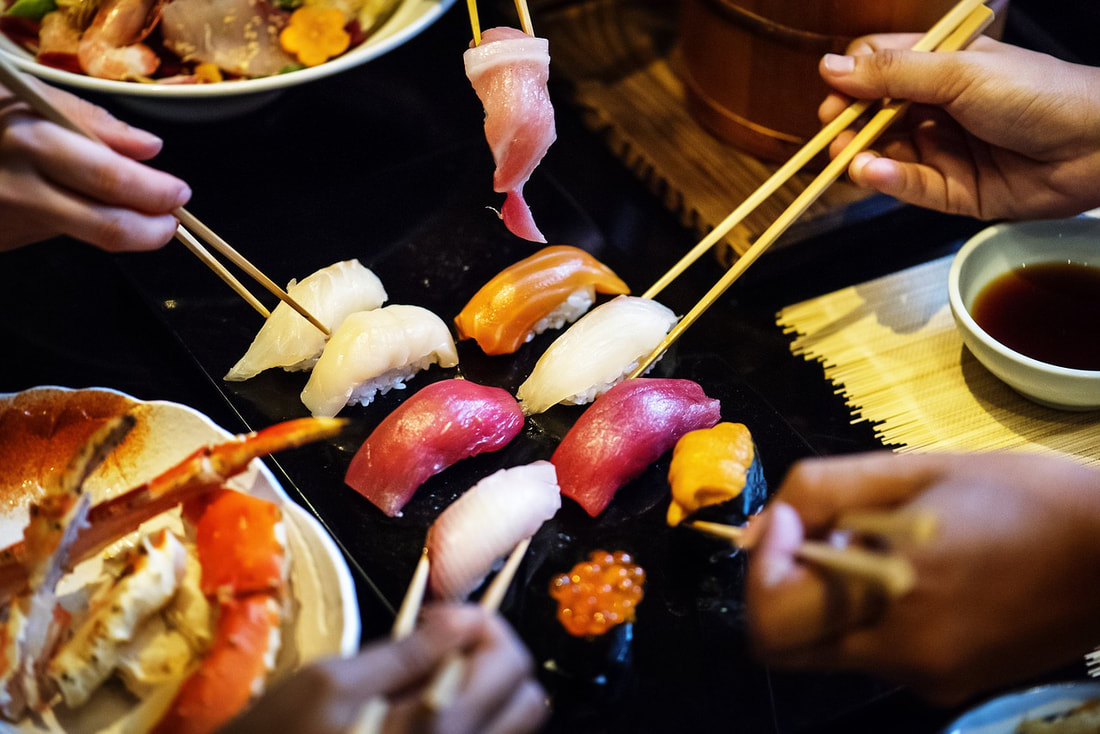
 Since April, scientists along with students from LMU, UCLA and Cal State L.A., have been purchasing small pieces of sushi monthly from 10 restaurants. In the laboratory, they extract DNA and analyze the fish. Image: rawpixel, Pixabay LOS ANGELES -- The results of the study quickly grabbed headlines: Researchers collecting seafood samples from Los Angeles restaurants had uncovered a sushi scam, discovering through DNA testing that nearly half of the fish selections had been mislabeled.
Also read, Fish and Seafood Exports Continue to Grow, According to Fisheries and Oceans Canada. But the release of those findings by a Loyola Marymount University-UCLA research team – and the media buzz that followed in January 2017 – is just the first part of the story. Since then, the authors have worked in collaboration with restaurants, nonprofit groups and regulatory agencies to form the Los Angeles Seafood Monitoring Project – with the aim of pinpointing causes of seafood mislabeling and identifying solutions. Their recommendations are published in an article released this month in "Frontiers in Ecology and the Environment." "After the wave of media attention about our study, what we saw were various stakeholders choosing to come to the table and work as partners," said Demian Willette, assistant professor of biology in LMU's Frank R. Seaver College of Science and Engineering, and the article's lead author. "With their help, we've made strides in identifying where to focus our efforts so that we can work constructively and proactively to reduce seafood fraud." Added Willette: "One of our goals is to get the 47 percent mislabeling rate way down." Since April, scientists along with students from LMU, UCLA and Cal State L.A., have been purchasing small pieces of sushi monthly from 10 restaurants. In the laboratory, they extract DNA and analyze the fish. The team's conclusion: "Sushi mislabeling is pervasive; intentional fraud is much less common," said Paul Barber, a UCLA professor of ecology and evolutionary biology and the article's senior author. "If we can solve the mislabeling issues, then we can focus on the intentional fraud." The Los Angeles Seafood Monitoring Project proposes a two-tiered approach to eliminating mislabeling. The first step is clarifying ambiguity in labeling that results from U.S. Food and Drug Administration limitations – such as the confusion caused by the label "Amberjack." This is the only acceptable name for five of the six Seriola species on the FDA's seafood list, the authors note, "despite variation in both price and taste, and also that these species are traditionally sold under separate names in Japan." "Requiring vendors to adhere to the single legal name 'Amberjack' denies biological reality and Japanese culture, and constrains consumers' ability to make informed choices," the authors write. "By removing mislabeling that results from current guideline limitations, "regulators can then focus on intentional seafood fraud." The second approach is to continue conducting blind sampling in restaurants and using DNA barcoding to monitor the fish that wholesalers sell to restaurants – tasks performed by LMU, UCLA and Cal State L.A. undergraduate students. Their results will be shared with Seafood Monitoring Project stakeholders and the public, and also communicated privately to restaurant owners – a step that's meant to be proactive and constructive, rather than responsive and punitive. After the release of the 2017 LMU-UCLA study, Jerry A. Greenberg, CEO of Sushi Nozawa Group, reached out to the authors in hopes of bridging a gap between research and consumers. The "rinse and repeat" cycle of press coverage following the release of DNA seafood surveys was not going to change the underlying issues, Greenberg said. Sushi Nozawa Group suggested that collaboration could prompt the necessary change. "Whether at SUGARFISH, KazuNori, or Nozawa Bar, starting off each day with the absolute top-quality fish is the most important thing we do. A component of quality is transparency and accuracy in labeling," Greenberg said. "We are proud to be part of the L.A. Seafood Monitoring Project and we look forward to a significant reduction in labeling issues as a result of the effort." "Rethinking Solutions to Seafood Fraud," is written by Willette, lead author; Barber, senior author; Sushi Nozawa Group's Greenberg; and Samantha H. Chang, associate director of conservation evidence at Arizona State University. Greenberg and Chang are co-authors. SOURCE Loyola Marymount University
0 Comments
Leave a Reply. |
Advertisement
News & Updates
Stay informed with the latest news around foodservice, agriculture and other related food news. Advertisement Opportunities
|
 RSS Feed